In most hotels, sustainability lives or dies in the small, repeatable moments.
Not in a policy document. Not in a poster in the back office.
It shows up in operational choices that guests can actually participate in, without friction.
One of the simplest examples is also one of the most effective: giving guests the option to skip room cleaning during their stay, and turning that decision into something tangible.
Hotels for Trees was built around that idea.
Guests can choose to skip a stay over clean, and in return a tree is planted on their behalf.
It is simple, easy to explain, and designed to fit the rhythm of a real hotel.
What makes the concept interesting is not only the environmental outcome.
It is that the initiative uses an existing hotel moment and turns it into a positive action, without adding complexity for the guest or the team.
How the concept works in practice
In practice, the idea behind Hotels for Trees is straightforward.
In many hotels, room cleaning is outsourced or organised per stay.
Each cleaning comes with a cost, often somewhere between eight and twelve euros, depending on the property, the room type and the local market.
When a guest decides to skip cleaning during a multi night stay, that cost is not incurred.
Over the course of several days, the savings add up.
Instead of disappearing into the operation, part of that saving is used to plant a tree on behalf of the guest.
The choice itself is intentionally simple.
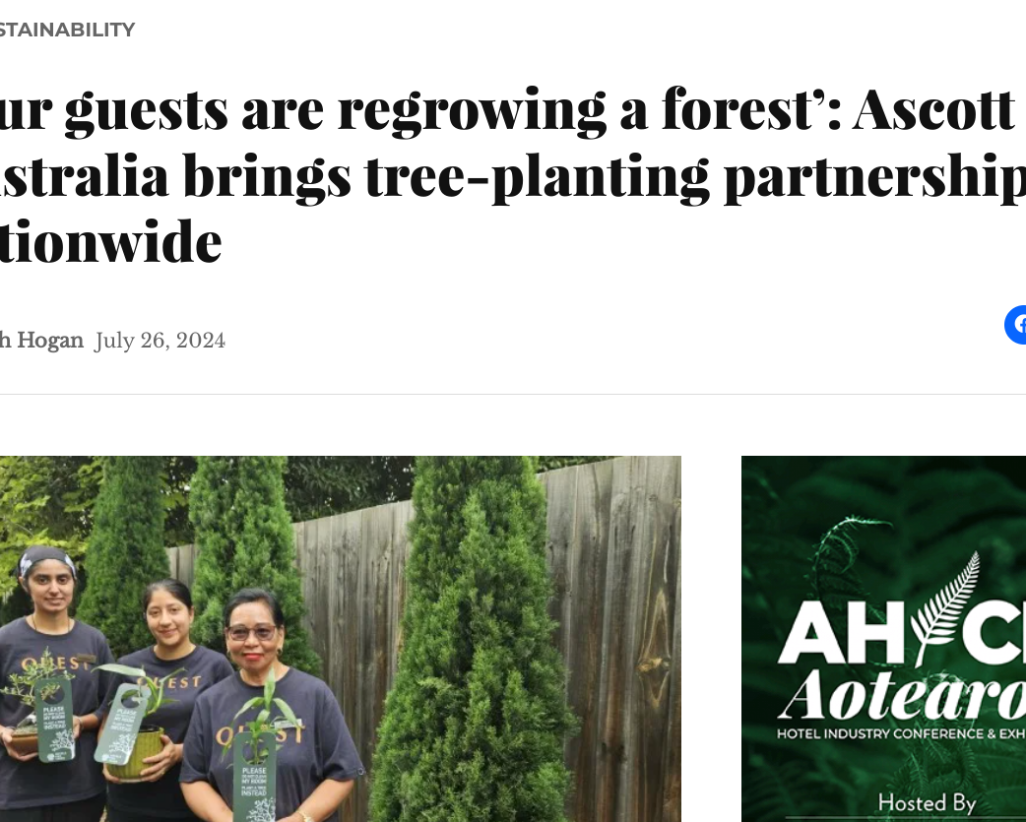
In some hotels, guests indicate their preference with a dedicated door hanger.
In others, the decision is already offered during online check in through the property management system.
Either way, the moment remains familiar.
Guests are not asked to change their behaviour, only to make a conscious choice.
From the hotel’s perspective, the model is low risk.
If a guest does not skip cleaning, nothing happens.
There is no obligation, no upfront commitment, and no pressure to participate beyond what feels right for the property.
That simplicity is what allows the concept to scale.
It fits into daily hotel operations without adding steps or creating extra work for housekeeping or front office teams.
Why credibility matters in sustainability
As sustainability initiatives have become more common, so has scepticism.
Guests and hotel teams alike have learned to ask reasonable questions.
Where are the trees planted?
Are they actually planted?
And what happens to them after the photo moment is over?
Hotels for Trees deliberately chose to address those questions head on.
Rather than focusing on volume alone, the initiative places emphasis on growing trees, not just planting them.
Trees are planted with respect for local biodiversity, avoiding monocultures and taking into account the ecological context of each project.
Where possible, planting is done together with local communities, so the trees become part of a longer term landscape rather than a short term gesture.
To support this approach, Hotels for Trees works with established partners such as Trees for All,
who help source land, select suitable species and ensure projects are maintained over time.
The goal is not to find the cheapest option, but a credible one.
This focus on transparency also shows up in how hotels and guests are involved.
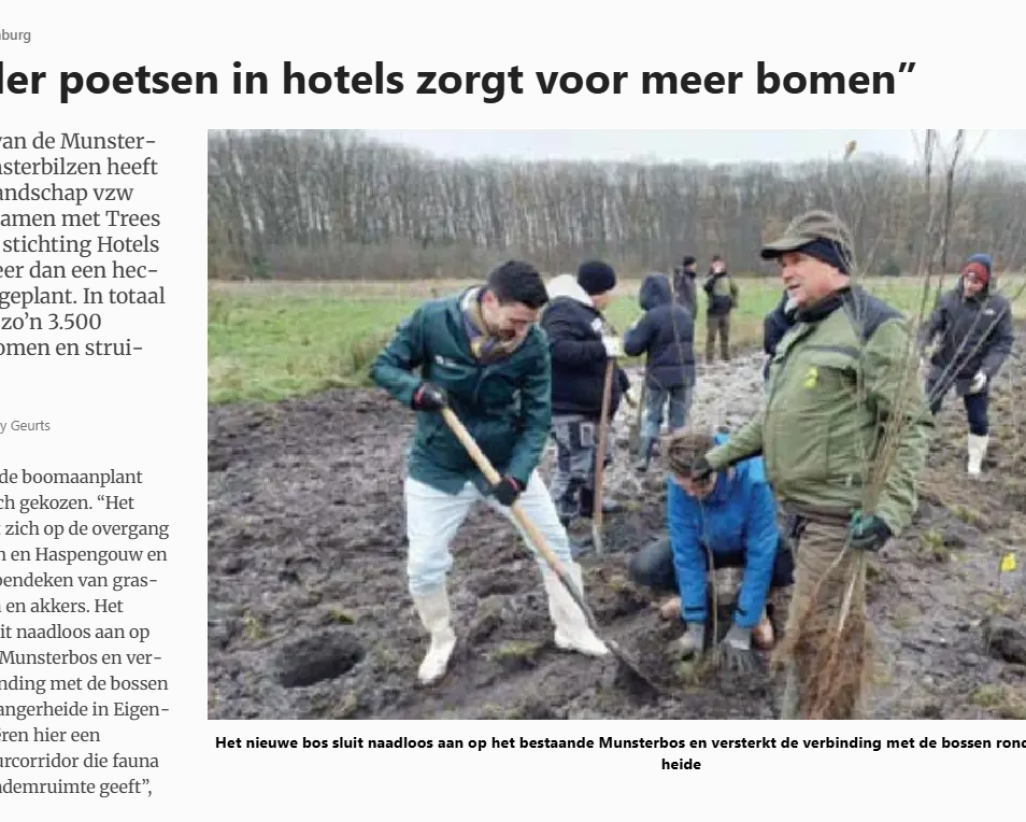
Through planting days, hotel teams are invited to see the projects for themselves.
They plant trees together, take part in the process, and build a tangible connection to the impact created by daily guest choices.
That visibility matters.
It turns an abstract idea into something real, and reinforces trust in a space where credibility is essential.
A hotelier’s perspective, not a startup story
The idea behind Hotels for Trees did not come from outside the industry.
It grew out of years spent on hotel floors, in opening teams, and in operational leadership roles across different countries and brands.
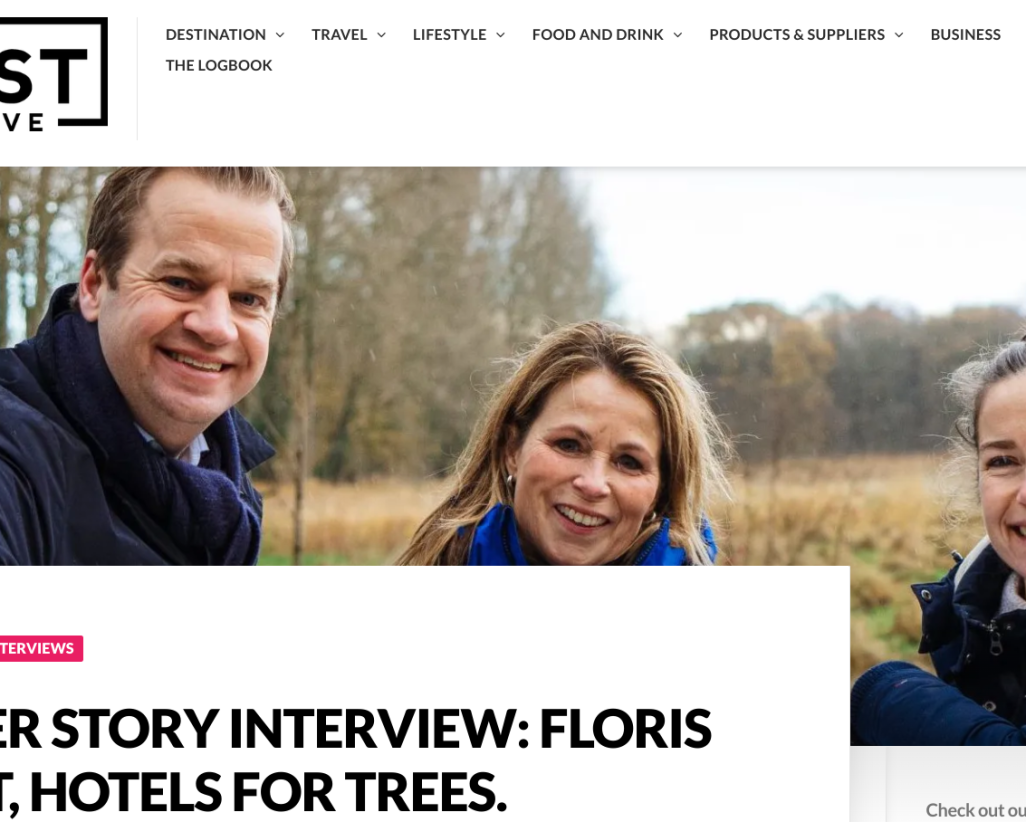
The person behind the initiative, Floris Licht, built his career in hospitality long before launching Hotels for Trees.
After graduating from hotel school in The Hague, he joined Hilton’s management development programme,
which took him to cities such as London, Frankfurt and Adelaide.
Those years shaped not only his understanding of hotel operations, but also how culture, leadership and guest expectations differ across markets.
Later roles with Accor and Hilton brought experience in hotel openings, general management and building teams from the ground up.
Sustainability was already part of that work, embedded in how properties were designed and operated rather than treated as a separate theme.
That background explains the tone of Hotels for Trees.
It is not framed as a campaign, but as an operational choice that fits naturally into the way hotels already function.
The focus is on feasibility, consistency and long term relevance, not on visibility alone.
For Floris, Hotels for Trees is not a departure from hospitality.
It is an extension of it.
Why sustainability must fit the guest journey
For sustainability initiatives to work in hotels, they have to respect the guest journey.
Guests are already navigating check in, room access, housekeeping preferences and payment flows.
Adding extra steps or moral pressure rarely leads to long term engagement.
What does work is offering a clear choice at a moment that already exists.
That is why Hotels for Trees integrates naturally into hotel systems and routines.
In some properties, the option to skip cleaning is offered during online check in.
In others, it is communicated in room through a familiar door hanger.
In both cases, the decision is framed as an option, not an obligation.
Technology plays a supporting role here, not a leading one.
Property management systems and housekeeping tools help teams anticipate guest preferences and adjust planning accordingly.
The sustainability choice becomes part of the operational flow rather than a separate process to manage.
This approach reflects a broader shift in hospitality.
Sustainability is most effective when it is designed into the experience, not added on top of it.
Guests remain in control, teams retain clarity, and the impact grows quietly over time.
From individual choice to collective impact
What makes the model behind Hotels for Trees effective is that it does not rely on big gestures.
Each individual choice made by a guest may seem small.
Skipping one room clean.
One tree planted.
On its own, the impact is modest.
But hotels operate at scale, and consistency changes the equation.
When thousands of guests make the same simple decision, across hundreds of properties,
the cumulative effect becomes visible.
Not only in the number of trees planted, but in how sustainability is experienced by guests and teams alike.
For hotels, the initiative creates a positive narrative without disrupting daily operations.
For guests, it offers a tangible way to contribute, without asking them to sacrifice comfort or convenience.
And for staff, it connects routine work to a broader purpose that goes beyond the individual stay.
This is where sustainability moves from intention to practice.
Not as a statement, but as a system.
A quiet shift in how hotels create impact
The hospitality industry has no shortage of sustainability ambitions.
What often determines success is whether those ambitions translate into everyday decisions that people are willing to make, again and again.
Hotels for Trees shows how small operational choices can lead to meaningful outcomes when they are designed with care and credibility.
There is nothing radical about skipping room cleaning.
What is different is how that moment is used to create awareness, connection and long term impact.
In a sector built on repetition and routine, that may be exactly where real change begins.
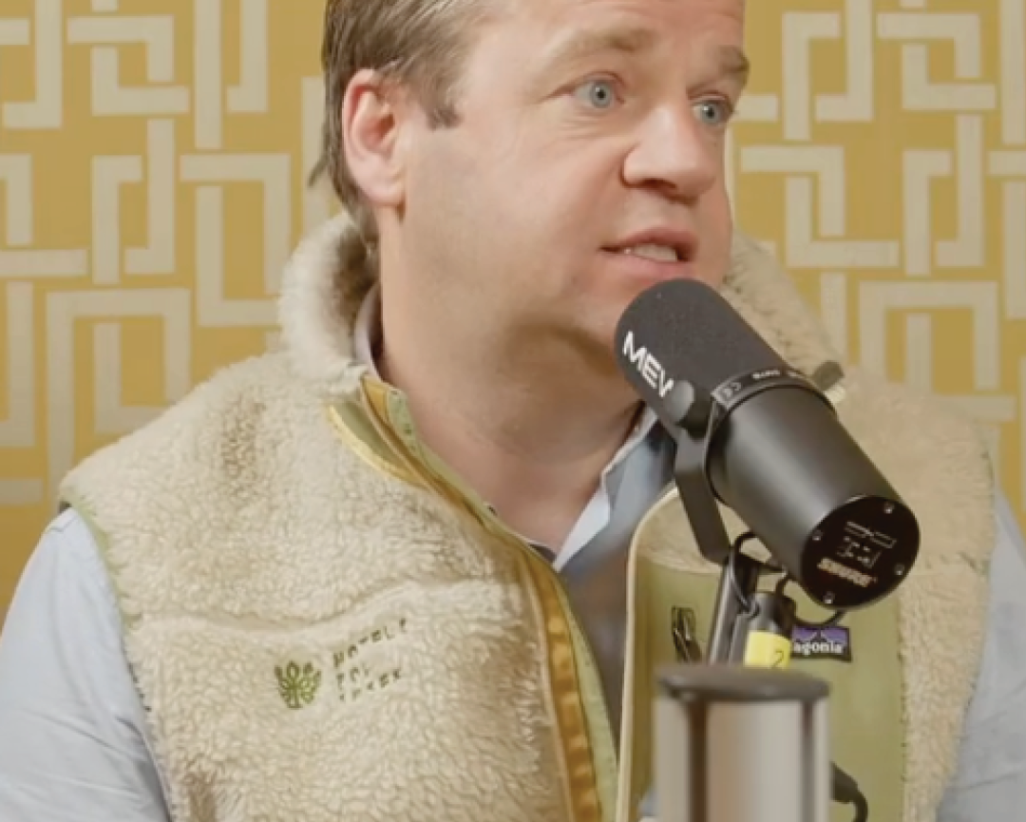
This conversation was hosted by Arjan Eikelenboom, founder of GuestJourney.ai and host of The Future of Hospitality,a platform exploring how operational decisions shape the future of hospitality.