Along British Columbia’s rocky coast, kelp forests rank among Earth’s most productive ecosystems, vital habitat for marine life and cultural touchstones for Indigenous communities. This project cultivates new kelp growth on the Sunshine Coast to restore underwater habitats, strengthen biodiversity, and support long-term ocean health.
The Project
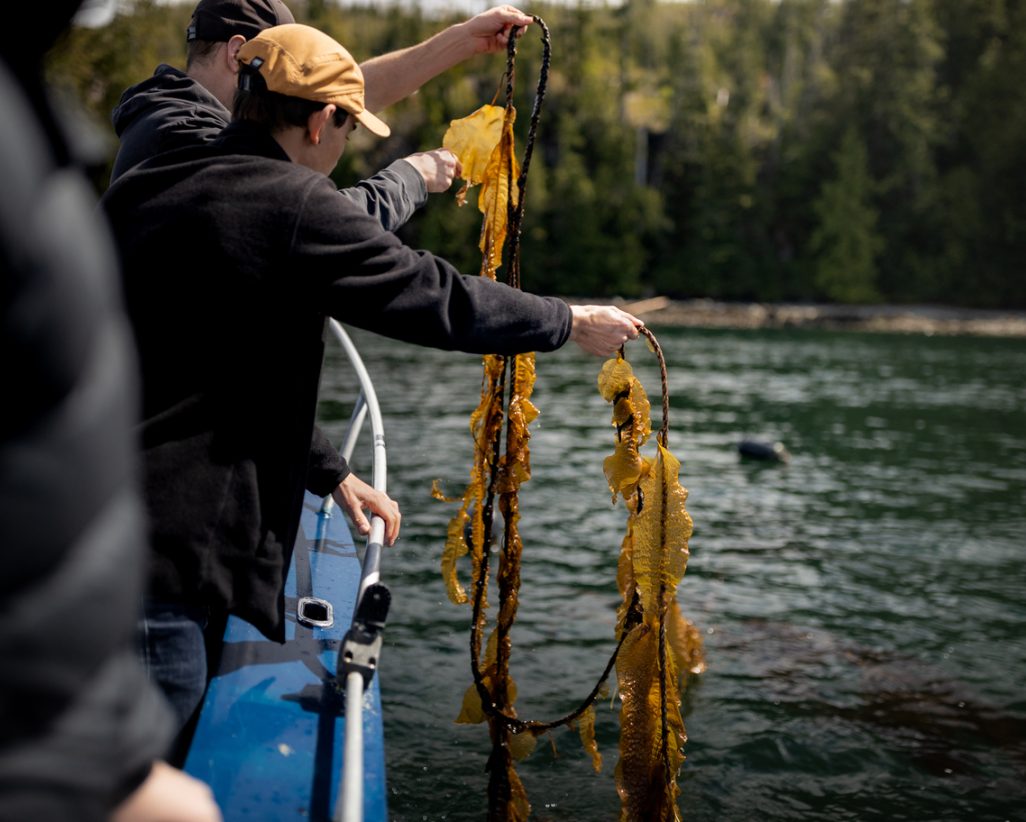
Ecodrive supports the annual cultivation of 5,000 meters of seeded kelp lines (~500,000 spores) in a licensed aquaculture zone in Moon Bay, Nelson Island. Three native species are grown: Bull Kelp, Sugar Kelp, and Winged Kelp. These lines create nursery habitat for herring and salmonids migrating through the Agamemnon Channel, within shíshálh traditional territory, restoring ecosystem balance while honoring Indigenous ocean stewardship.
The Process
Cultivation begins in controlled nurseries, where spores develop into juvenile sporophytes before being out-planted between December and February. Teams use seeded-line and green-gravel methods to optimize survival. Growth rates, biomass density, and carbon absorption are tracked throughout each cycle, which yields millions of new sporophytes and measurable ecosystem recovery.
Community & Ecosystem Impact
- Biodiversity — Essential habitat for herring, salmon, rockfish, and northern abalone
- Cultural preservation — Supports Indigenous stewardship and traditional uses of kelp as food, medicine, and ceremonial material
- Climate — Natural carbon sink; improves water quality and absorbs excess nutrients
- Livelihoods — Creates research, aquaculture, and monitoring opportunities
- Marine resilience — Strengthens coastlines against erosion, acidification, and biodiversity loss
Interesting fact: Over 40% of the world’s kelp forests have vanished in the past 50 years—yet kelp can grow up to half a meter a day, making it one of Earth’s fastest-growing organisms and a powerful ally in reversing ocean degradation.